THE FIVE SITUATIONS WHERE A 3-SEASON TENT FAILS

Specific scenarios where the rating genuinely breaks down
❄Snow Load — Even Small Amounts
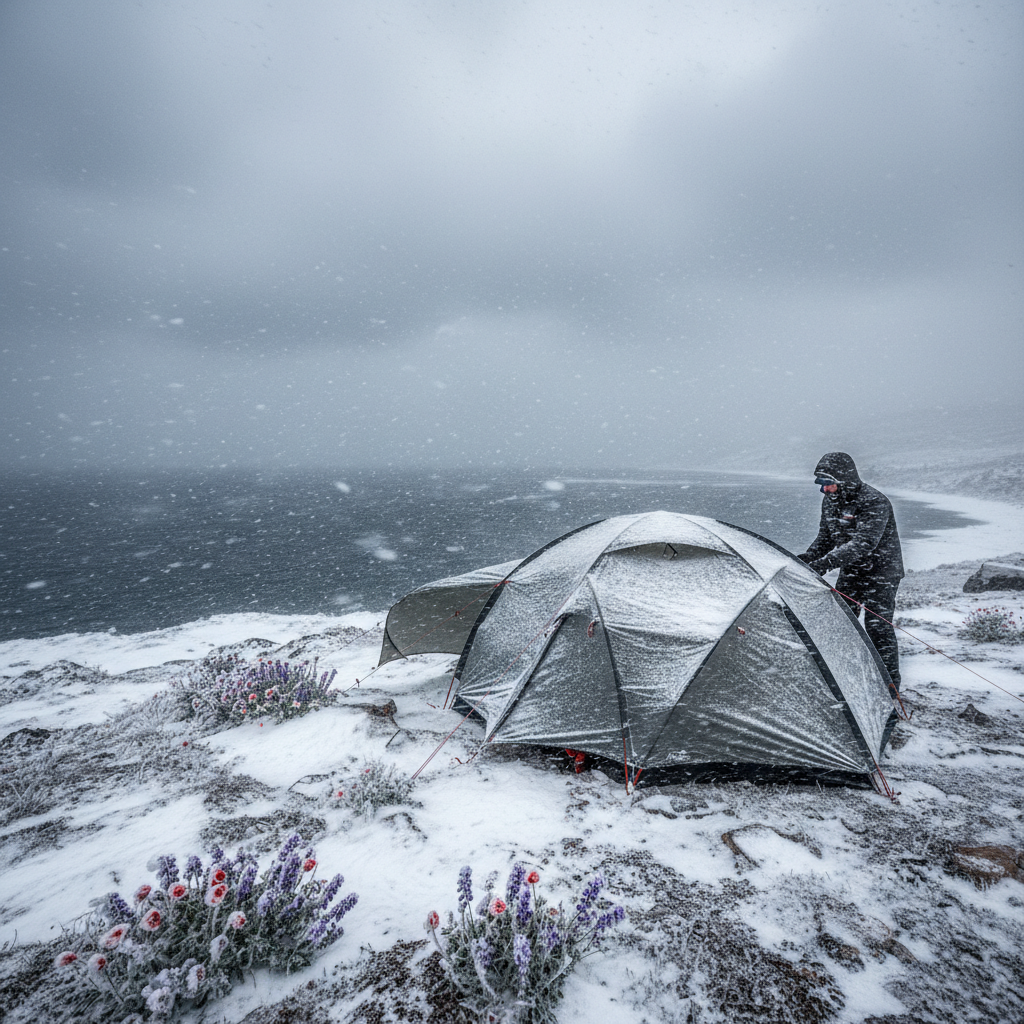
A 3-season tent's pole structure is engineered for rain shedding, not snow bearing. Wet spring snow weighs significantly more than dry powder, and even a few inches accumulating on a tent designed for rain can bow, stress, and eventually snap aluminum poles. The danger zone rule is clear: do not take a 3-season tent above the treeline in winter. If a storm arrives, the poles will fail and you will be left without shelter.
💨Sustained High Winds on Exposed Sites
A standard 3-season tent has 4–6 guy-out points. A proper 4-season expedition tent has 10–20. The difference matters enormously in sustained wind above 35–40 mph. The 3-season tent's clip-attachment pole system concentrates wind stress on plastic attachment points, which fatigue and fail. A 4-season tent uses continuous pole sleeves, distributing stress across the entire pole length. In a mountain storm, this structural difference is the difference between shelter and emergency.
🌧Prolonged Heavy Rain With Wind
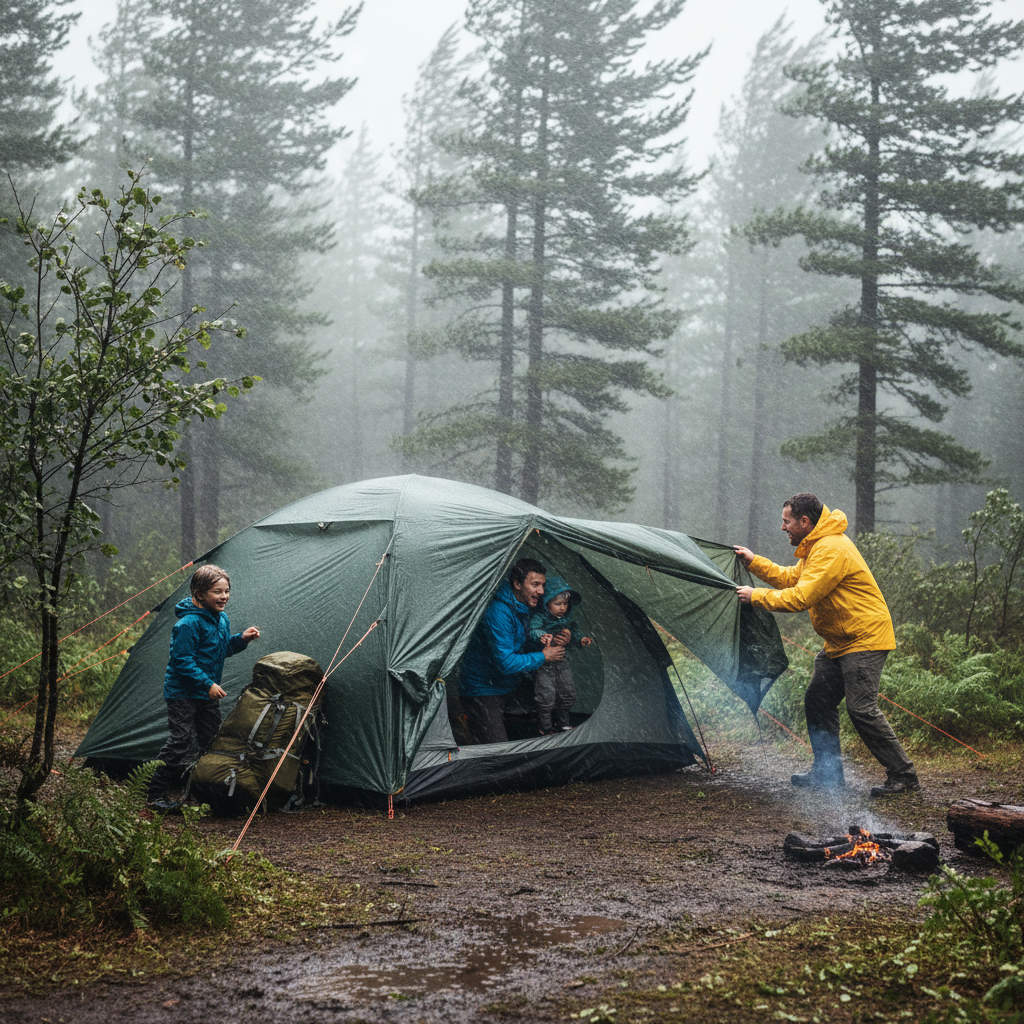
A brief downpour is not the same as 12 hours of sustained heavy rain with wind gusts. Many 3-season tents handle the former with ease and struggle badly with the latter. Wind-driven rain finds gaps at tent edges, stresses seam sealing to its limit, and pools against tent floors in ways that calm vertical rain never does. If your planned camping area is known for multi-day rain events — the Pacific Northwest, the Scottish Highlands, alpine environments — a 1,500mm HH tent with basic seam taping is not the right choice.
🏔Exposed Above - Tree line Camping
Below the tree line, trees absorb and deflect wind, moderate temperature swings, and generally create a more sheltered microclimate. Above the treeline — on open ridges, above alpine meadows, on mountain saddles — conditions are categorically different. Wind speeds are higher, temperature drops are faster, and weather changes come with far less warning. The 3-season tent that performed beautifully for two years of forested camping can be dramatically inadequate the first time you pitch it on an exposed ridge.
🌡Shoulder Season Cold Snaps
Late September and October in mountain environments can deliver overnight temperatures that drop 20–30°F faster than any forecast predicts. A 3-season tent's heavy mesh body — excellent for summer ventilation — becomes a liability in cold, allowing wind to move through the interior and stripping warmth from your sleeping system. A 3–4 season tent with a solid-walled body and full-coverage fly handles this scenario; a summer-spec 3-season tent does not, regardless of what the label says.
"Most campers are better off investing in a high-quality 3-season tent and upgrading their sleeping bag and pad, rather than buying a 4-season tent they will find miserable to use in July."
The most common expert recommendation — and it applies to most readers of this article