WHAT TO ACTUALLY LOOK FOR WHEN BUYING A TENT

Chapter Four
Since the season number itself is only a starting point, here are the actual specifications and design features worth examining when choosing a tent for any conditions beyond mild summer camping.
The Tent Buyer's Real Checklist
Flysheet HH rating: 2,000mm minimum for any trip where rain is possible. 3,000mm+ for exposed or shoulder-season use. Check the floor rating separately — it should be 5,000mm or higher.
Factory seam taping vs seam sealing: Taped seams (a thin tape bonded over seam stitching) are more durable and reliable than seam-sealed seams (a liquid sealant brushed on). Budget tents often use seam sealing; mid-range and premium tents tape. Check the spec sheet.
Pole count and guy-out points: More poles mean more structural support. More guy-out points mean better wind performance. For shoulder-season or exposed use, count the guy points and stake them all — most campers only use half.
Full-coverage fly vs partial fly: Some 3-season tents have a fly that covers only part of the tent body, leaving mesh exposed at the sides. This is a summer-only design. For shoulder season, look for a fly that reaches close to the ground on all sides.
Vestibule space: The area under the fly but outside the main tent body. In serious weather, all your wet gear, muddy boots, and saturated outer layers live in the vestibule — not inside the tent. A vestibule smaller than 10 sq ft is a real limitation in wet conditions.
Freestanding vs non-freestanding: Freestanding tents hold their shape without stakes. Non-freestanding (trekking pole tents, tarps) are lighter but require proper staking, which means they cannot be pitched on solid rock or hard ground. Know which you have before your first rocky campsite.
Pole material: Aluminum poles are the standard for quality tents — lighter and more durable than fibreglass. Fibreglass poles are common on budget tents and can snap in cold weather or under wind stress. If the pole material isn't specified, ask or avoid.
The Final Word
THE RIGHT TENT
FOR THE RIGHT
CONDITIONS
A decision framework — not a product recommendation
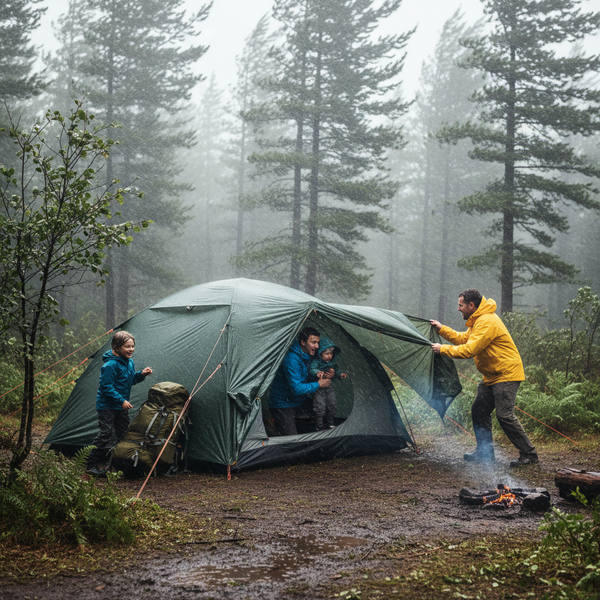
YOUR SITUATION: Car Camping, mild summer, sheltered forested sites
TENT RATING NEEDED: 3 season - any quality
WHAT MATTERS MOST: Space, Comfort, ease of set up. Weight is irrelevant.
YOUR SITUATION: Backpacking Spring through fall, below tree line
TENT RATING NEEDED: 3 Season - mid - high quality
WHAT MATTERS MOST: HH 2,000+, taped seams, full-coverage fly, aluminum poles.
YOUR SITUATION: Shoulder season, exposed ridges, mountain environments
TENT RATING NEEDED: 3-4 Season (Extended)
WHAT MATTERS MOST: Solid-walled body, 8+ guy-out points, HH 3,000+, Full-coverage fly.
YOUR SITUATION: Winter camping, above treeline, any significant snow fall
TENT RATING NEEDED: 4-Season - no exceptions
WHAT MATTERS MOST: Continuous sleeve poles, 10-20 guy-out points, reinforced pole junctions, snow skirts.
YOUR SITUATION: High altitude expeditions, mountaineering, blizzard conditions
TENT RATING NEEDED: 4-Season Expedition Grade
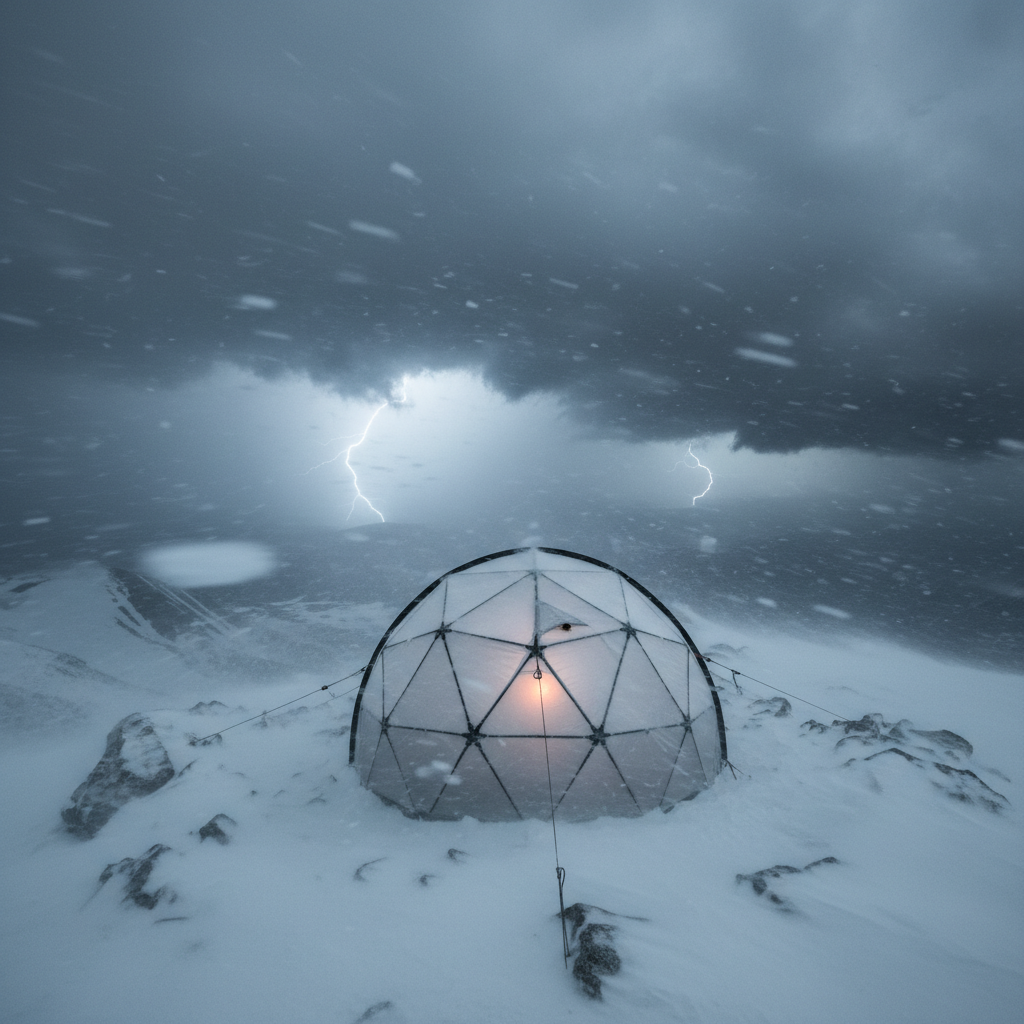
WHAT MATTERS MOST: Geodesic or semi-geodesic pole structure. Hilleberg, Black Diamond, or equivalent. This is survival gear.
The season rating on your tent is a starting point for a conversation, not the end of it. The real questions are the conditions you actually camp in, the weather variability of your specific region, and whether the specifications — hydrostatic head, seam construction, pole material, guy-out point count — match the demands you will place on the shelter. Most campers need a high-quality 3-season tent and will never need anything else. Some campers routinely camp in conditions that require more, and for them, a quality 3–4 season tent is a safety investment, not a luxury.
What nobody needs is to be in a storm, in a tent that is failing, wondering why they didn't read the specifications before they left. The tent industry won't regulate itself into honesty about these ratings. The information is available — HH ratings, seam construction details, pole specifications — in every product page for any quality manufacturer. The camper who reads the spec sheet before buying is the camper who sleeps dry.
"The primary advantage of a 4-season tent is wind protection. Be concerned about the tent's ability to stop wind from robbing you of warmth — not about insulation, which the tent doesn't provide anyway."
A summary of what experienced mountaineers actually worry about
One final, practical note: the best preparation for any camping trip involving uncertain weather is not necessarily upgrading your tent. It is site selection. A well-chosen sheltered site — tucked behind a natural windbreak, on elevated ground away from drainage paths, under tree cover where fire danger permits — will protect a moderate 3-season tent in conditions that would challenge a poorly-sited 4-season shelter. The tent you buy matters. Where you pitch it matters just as much.